Building the last great airship.
Keep your sightglass full, your firebox trimmed, and your water iced.
Building the last great airship.
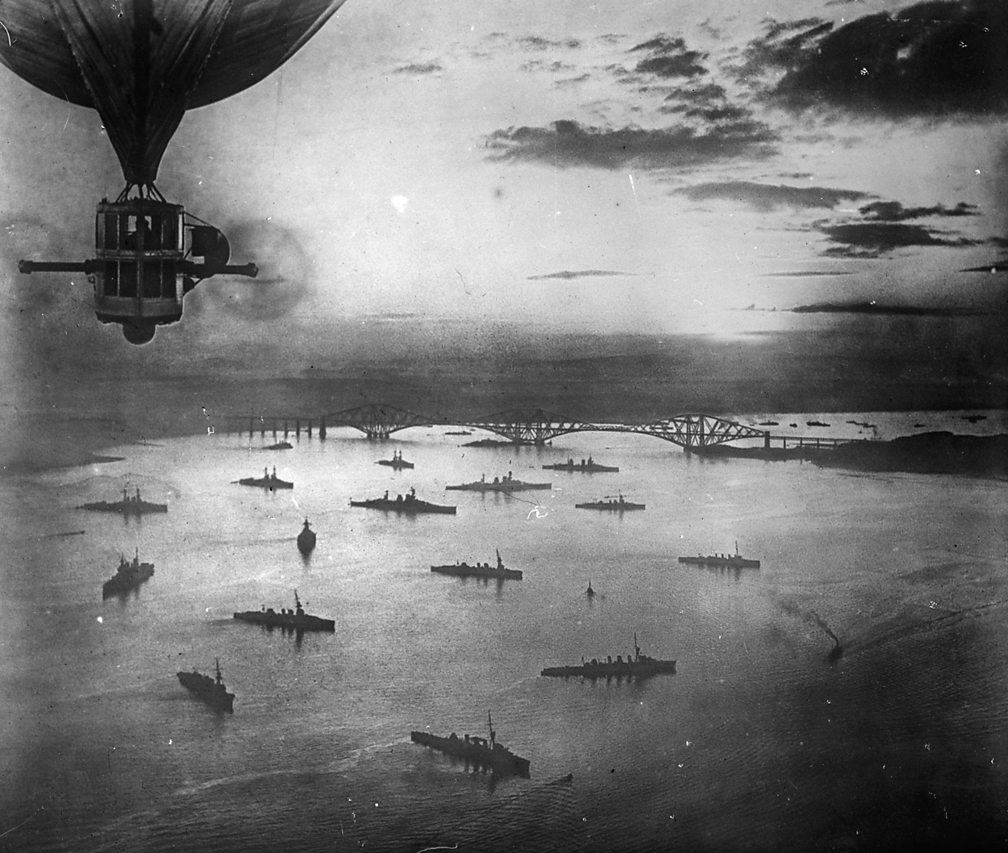
An aerial view of a portion of the Grand Fleet at anchor in the Firth of Forth looking at the iconic rail bridge, taken from the British Airship R.9.
Secrets of the L49
Found this fascinating description of the interior of the downed German airship L49.
Enjoy
Keep your sightglass full, your firebox trimmed and your water iced.
KJ
All the words!
In the early 18th C there was a kind of mania for "dictionaries".
While often oriented to the rapidly expanding vocabulary of English,
they also covered many distinct subjects.
Many Victorians in the 19th C would recognize these subjects.
Some persist to this day others have faded from the main stream of academic pursuits.
This is from "The New World of Words: or a Universal English Dictionary" by
John Philips, first published in 1706, (edited by John Kersey 6th
edition). The 6th edition included, "A brief Explication of all terms
that relate to the Arts and Sciences, either Liberal or Mechanical,
viz."
Here is the list:
Grammar, Rhetorick, Logic, Theology, Law, Metaphysicks, Ethicks,
Natural Philosophy, Natural History, Physick, Surgery, Anatomy,
Chymistry, Pharmacy, Botanicks, Arithmetick, Geometry, Astronomy,
Astrology, Cosmography, Hydrography, Navigation, Architecture,
Fortification, Dialling, Surveying, Gauging, Opticks, Catopticks,
Diopticks, Perspective, Musick, Mechanicks, Statics, Chiromanct,
Physiognomy, Heraldry, Merchandise, Maritime and Military affairs,
Agriculture, Gardening, Handicrafts, Jewelling, Painting, Carving,
Engraving, Confectionery, Cookery, Horsemanship, Hawking, Hunting,
Fowling, Fishing, etc.
------
Whew!
I suspect there was still a lot included under "etc" ![]()
Keep your sightglass full, your firebox trimmed, and your water iced.
KJ
A real submarine in 1867?
Previously I wrote about the amazing Ictineo II, the worlds first true submarine.
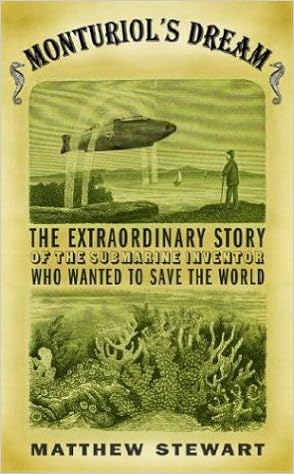
I am currently reading a fascinating book "Munturiol's Dream" by Mathew Stewart, published in 2004.
The book covers the life of this extraordinary man NarcĂs Monturiol. A social revolutionary in turbulent 19th century Spain. He lept at any chance to try to create a utopia. He was a staunch non-Marxist Communist and participated actively in many revolts and social actions, mostly in Barcelona, that hotbed of republican/utopian unrest in Spain.
What I find most fascinating was that Monturiol was NOT an engineer, he was trained as a lawyer and spent most of his time as a revolutionary publicist. His various journals, pamphlets, and news papers were popular amongst Barcelona's teeming thousands and he was regularly shut down by the authorities as a result. He was several times forced to go into exile in the countryside to avoid arrest.
So how did this revolutionary/utopian end up creating the marvelous machine that was the Ictineo II?
Once upon a time...
You may have noticed that I and others post images and stories that put a Parasol Duelling Spin (TM) on otherwise historical events. This may be an affectation but it is also intentional. Very early in the modern (re-)creation of our sport Jayne (Madame Saffron) and I made the conscious decision to always treat parasol duelling as a real historical competition. Surprisingly our friends and fellow Duelists agreed to play along.
I was asked once by a Steampunk blogger if Parasol Duelling was "real". My answer was, "Of course it is real!" Then he said, "No. I mean is it really a Victorian sport?". I paused for a moment and said, "In our Steampunk world it is" :-)
At all the demonstrations and competitions we have done we always treat the sport as real, and therefore worthy of taking it seriously, at least a little bit. By placing Parasol Duelling in the context of real Victorian and Edwardian history we get to tag along with all the wonders, and gorgeous clothes, of that age. But in order to make that work we have to be a bit subtle. This works best when our stories, and the "gloss" that we add to otherwise mundane history, are just realistic enough that the greater non-steampunk world is likely to ponder whether it is true or not.
Steampunks, of course, do not have a problem with alternate histories. In my experience of large Steampunk gatherings there are likely to be any number of alternate histories being discussed, sometimes as many as there are people present in fact. People like to have a back story for their costumes and personae after all. But what makes the one in the background of Parasol Duelling so much fun is that it is shared.
It is not just Steampunks either, our sport has attracted people in various historical re-creation groups as well. The very thing that would have made Parasol Duelling a good sport for Ladies in Queen Victoria's time, elegance, skill, honour, and decorum with a touch of aggression, and intense competition, make it a great sport for cosplayers,Victorian/Edwardian aficionados, steampunks, and even our non-costumed friends and families.
There is an alternate history in the back ground, you can read it here on this blog and on the pages of Madame Saffron Hemlock's Parasol Duelling League, but all of you who enjoy our elegant sport are helping to write a very real history indeed.
Thank you for joining us on this journey to create the real sport that is Ladies Parasol Duelling.
Spread the word!
Keep your sightglass full, your firebox trimmed, and your water iced.
KJ
Before there were lightmeters...
Another interesting Nomographic device.
Like the Airship Engineer's Slide rule I discussed previously, other technically complex disciplines made use of nomographic devices to simplify on the fly calculations.
Photographers developed devices for determining exposure times known as Actinographs.
The name originally meant a device that recorded the amount of sunlight for a day but was adopted for the photographer's slide rule that used that data.
Here is an example from the later 19th C
A Video full of Airships!
A wonderful video of post WWI Airship development, triumphs, and tragedies.
Lots of video from the time.
Enjoy
Keep your sightglass full, your firebox trimmed and your water iced.
KJ
Pie in the Sky Project
This one is a thought experiment.
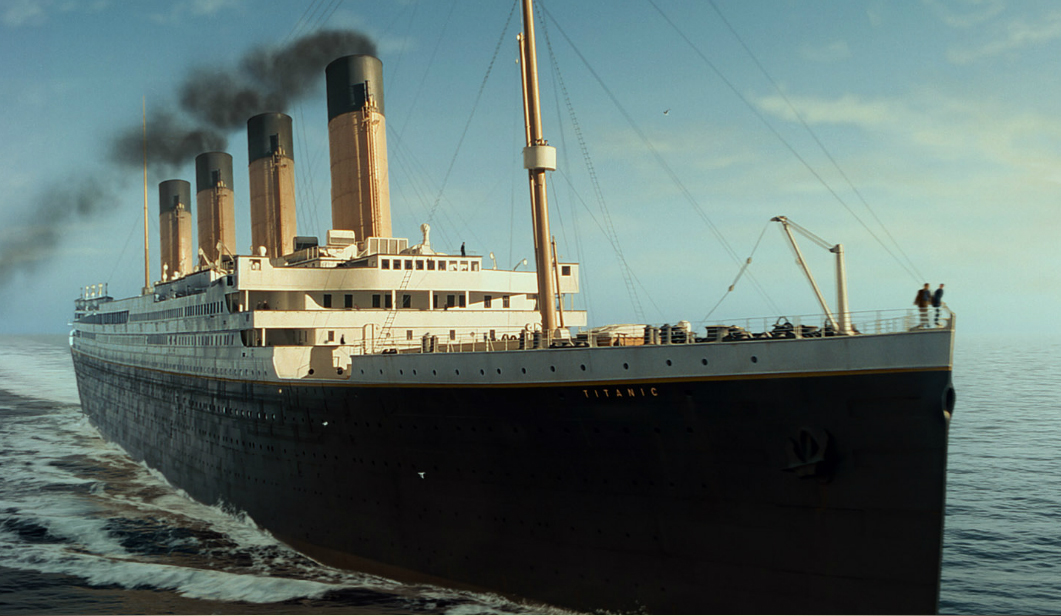
I watched James Cameron's Titanic the other night.
(Yes I cried. Shut up!)
A panorama of Ghosts!
This delightful film, taken from the footplate of a tram in 1901, shows the harbourside of Morecambe in the UK.
A look at a typical day with ordinary people of all classes and occupations going about their business on a bright sunny day.
Also a little creepy to me because these are all ghosts, nobody in this film is still alive.
Keep your sightglass full, your firebox trimmed and your water iced.
KJ
An Airship Technical Gold Mine
Previously I reviewed one of the only books ever published on real airship design.
The author Charles P. Burgess worked for the National Advisory Committee for Aeronautics, the NACA.
During the heyday of the great rigid airships, in the first third of the 20th century, the NACA commissioned and collected a series of technical studies, papers and technological reviews of airship design. These papers show just how seriously rigid airships were taken as the future of heavy lift and long distance aircraft.
Recently NASA (the direct descendant of the NACA) has made scans of these reports and analyses available through the Internet Archive.
If you are curious check out this simple search:
Airship Technical Gold Mine
Here you will find yellowed type written reports, with hand drawn graphs, diagrams, plans, and old photographs, documenting in detailed analyses the state of the art in Airship design in 20's and 30's.
The files are available in many formats including plain text, colour PDFs, html, epub and other ebook formats.
The titles alone make this old Flight Engineer drool!
Here are some examples to "wet yer whistle":
THE PRESENT STATUS OF AIRSHIP CONSTRUCTION, ESPECIALLY OF AIRSHIP FRAMING CONSTRUCTION
By Hans Ebner
1938
FULL-SCALE TURNING CHARACTERISTICS OF THE U.S.S. LOS ANGELES
By F. L. THOMPSON
CONTRIBUTION TO THE TECHNIQUE OF LANDING LARGE AIRSHIPS
By 0. Krell
PART I
Part II is here
From Zei'tschrift f'.r FLigteohnik und. Motorluftschiffahrt
September 28, 1928
RECENT RESEARCHES IN AIRSHIP CONSTRUCTION I
Forces of Flow on a Moving Airship and the Effect of he Control Surfaces
By H. Naatz
1928
Many of these reports are translations of German reports. The Germans were the acknowledged world leaders in Airship design at the time. The first report listed includes a German paper written in 1933 while the Hindenburg was under construction and before the loss of the Akron, which is noted in a footnote. The full report was not translated and acquired by the NACA till 1938.
Since these reports were typewritten they often contain typos, to me these little errors bring these fairly dry technical reports alive. In a way they show them as being human made. Prepared to record important information not just display elegant formatting.
For anyone interested in the technical details of real airship designs these reports are truly a gold mine of information.
Keep your sightglass full, your firebox trimmed and your water iced.
KJ
Here are some sample pages of the kinds of details included in these reports:
A city of ghosts.
Previously I mentioned the odd effect that colorized historical photos had on me.
This delightful film of Berlin in 1900 has been colourized and edited for Facebook by Paul Hardy.
It is a city of ghosts indeed, since every single person shown has passed now.
Seeing black and white photos and the grainy old movies sometimes brings on a bit of "memento mori" but this film with its muted colours, showing street scenes from a bustling metropolis is moving indeed.
Keep your sightglass full, your firebox trimmed and your water iced.
KJ
https://www.facebook.com/video.php?v=10153303691386248&set=vb.769001247&type=1
SOMEWHERE IN TIME 1900.
A HUNDRED AND FIFTEEN YEAR OLD FILM MADE NEW. MAINLY BERLIN & MUNICH, GERMANY.
Over a Million FB viewers have been moved by my film, experiencing a surreal mixture of emotions that few have been able to fully describe.It was coloured about 10 years ago but I've now digitally sharpened it as well as removed dust and grain to give an even better experience.Truly magical, moving footage that I've cut and edited to my favourite piece of classical music. The original film which I took the footage from is very much darker and also depicts a large amount of military segments.I wanted to edit this however to show the positivity and pride of the everyday people in their day to day lives as they embrace all the splendour of that time period on a human level.Clearly, like today, some seem richer than others, yet all of them seem to display a sense of dignified purpous often missing in todays world.
All these forgotten souls are left rotting on old grainy dark films often with sombre depressing music thrown over. It's my belief that they deserve better. Beautiful music and beautiful images presented in the right way can be incredibly emotive and powerful and I felt that this was needed in order to properly transport the viewer back through time and really ''feel'' what it was like.I've worked hard to convey that sense of splendour and make people see and feel that a sunny day then looked just like a sunny day today. These people lived, loved, laughed and cried and had real lives. They did not live in darkness with grey skies and grainy mist as we are often used to seeing on decaying films.
The wonderfully emotive music I've used is the soundtrack from the movie 'Somewhere In Time' and was written by Film Composer John Barry, not to be confused with 'The Eighteenth Variation of Sergei Rachmaninoff's Rhapsody on a Theme of Paganini' which also runs throughout the film.Savour this as you watch it. All these people whose lives were just as important to them in their time era as we think ours our now. I noticed how happy they seem to be going about their business and I tried to study different characters.... who were they?... what was their story? Watch the woman adjusting her hat for example at the end of the film. She seems very concerned about her image as she proudly sports the latest fashion..and notice how happy the kids are playing in the street.The more you study these people the more it will fascinate you. Their lives are less complicated than ours in terms of technology but you can clearly see the overwhelming community spirit here without video games, TV or computers. Somewhere in time, all gone forever..all just ghosts....yet frozen here for you to glance upon as if through some magical time machine window.
Enjoy, The Time Guru.
Posted by Paul Hardy on Thursday, 30 April 2015
History to me was always Black and White.
Previously I posted how colour changed how I viewed history. How the modern wars of the 20th C were mostly in black and white whereas the wars of history were in colour, but the colour of romanticized paintings.
The same goes for the early days of photography, which of course was black and white.
Now through the use of computers and careful analysis, artists can recreate classic photos from the past in colour.
Posted on Powerful Primates are a selection of 53 Colourized Photos from the Past
These pictures produce an odd effect for me. My mind does not know how to treat obviously historic images when they are so realistically coloured. It's as if I can't figure out if they are real or not. If they were in their original black and white form that wouldn't be a problem.
Here are some examples for you:
![]() |
| Madison Square Park New York City around 1900. |
![]() |
| Mark Twain in 1900 |
![]() |
| Union Soldiers taking a break in 1863 |
Hindenburg Disaster
On this day in 1937 the German rigid Airship LZ129, the Hindenburg, was destroyed by fire as she approached the mooring tower at the Naval Air Station near Lakehurst, New Jersey.
On this night in 1912
In the icy darkness of the North Atlantic sometime between 2.15 a.m.
and 2.25 a.m. a primitive spark gap transmitter blasted the following
message into the aether and was forever silent thereafter.
...
--- ... ... --- ... -.-. --.- -.. -.-. --.- -.. - .. - .- -. .. -.-.
.-.-.- .-- . .- .-. . ... .. -. -.- .. -. --. ..-. .- ... - .-.-.- .--.
.- ... ... . -. --. . .-. ... .- .-. . -... . .. -. --. .--. ..- - .. -.
- --- -... --- .- - ... .-.-.- - .. - .- -. .. -.-. .-.-.-
RIP
RMS Titanic, passengers and crew.
The only
known photograph of Titanic's Marconi
room. Taken by passenger Fr.
Browne, who disembarked in Queenstown.
Operator is probably Harold Bride.
Photograph from the Fr. Browne collection.
|
| The Titanic Marconi room set from the James Cameron movie. |
Herndon was carrying perhaps 15 tons of gold (then worth $2,000,000) and 474 passengers, many of whom were from California and were returning to the East Coast, as well as 101 crew members. After leaving Cuba on 7 September 1857, a few days later, they encountered a three-day hurricane off Cape Hatteras. The hurricane steadily increased in force. By the 12th, the Central America was shipping water through several leaks due to the ship's lack of water-tight bulkheads and general unseaworthiness. Water in her hold put out her boiler fires, precluding the use of steam for both controlling the ship and pumping out the bilges.
Herndon recognized that his ship was doomed; he flew its flag upside down as a distress signal and hoped another ship would see them. At 2 p.m., the West Indian brig Marine arrived to help take passengers from the stricken steamer. It did not have room to take on all of the passengers and crew. Commander Herndon supervised the difficult loading of women and children into lifeboats to transfer to the Marine. He gave one of the women passengers his watch to send to his wife, saying that he could not leave the ship while there was a soul on board. Most of the women and children reached safety on the Marine. Herndon's concern for his passengers and crew helped save 152 of the 575 people on board.
Men on the Central America tried to break up wooden parts to use as floats, in hopes of surviving the sinking. Some were rescued later by passing vessels, but most of the 423 persons on board died in what was the largest loss of life for a commercial ship in United States history. Survivors of the disaster reported last seeing Commander Herndon in full uniform, standing by the wheelhouse with his hand on the rail, hat off and in his hand, with his head bowed in prayer as the ship gave a lurch and went down.
The ship disaster and loss of so much gold, which banks still depended on, contributed to the financial Panic of 1857 in the United States.
The wreckage of the ship was discovered in a 1987 treasure recovery expedition.
The wondrous machine that might have changed the world!
In the Airship Technology Speech I gave back in January at the Absinthe Cafe the place where our Role Playing World separated from the real world was when Babbage's Analytical engine was actually constructed and working in 1880.
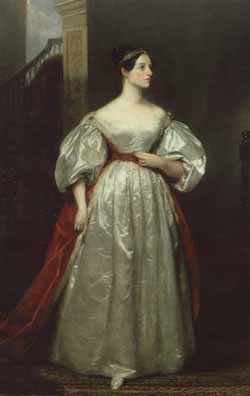
This world changing event was due to the work of Augusta Ada King, Countess Lovelace.
In the real world Ada died in November of 1852 before Charles Babbage had perfected his design. In our alternate world she outlived Babbage and was responsible for making his designs work, under contract to the Royal Navy for whom Babbage was working as well.
[The Analytical Engine] might act upon other things besides number, were objects found whose mutual fundamental relations could be expressed by those of the abstract science of operations, and which should be also susceptible of adaptations to the action of the operating notation and mechanism of the engine...
Supposing, for instance, that the fundamental relations of pitched sounds in the science of harmony and of musical composition were susceptible of such expression and adaptations, the engine might compose elaborate and scientific pieces of music of any degree of complexity or extent.
Ada was often ill, beginning in early childhood. At the age of eight, she experienced headaches that obscured her vision. In June 1829, she was paralyzed after a bout of measles. She was subjected to continuous bed rest for nearly a year, which may have extended her period of disability. By 1831, she was able to walk with crutches. Despite being ill Ada developed her mathematical and technological skills. At age 12, this future "Lady Fairy", as Charles Babbage affectionately called her, decided she wanted to fly. Ada went about the project methodically, thoughtfully, with imagination and passion. Her first step in February 1828, was to construct wings. She investigated different material and sizes. She considered various materials for the wings; paper, oilsilk, wires and feathers. She examined the anatomy of birds to determine the right proportion between the wings and the body. She decided to write a book Flyology illustrating, with plates, some of her findings. She decided what equipment she would need, for example, a compass, to "cut across the country by the most direct road", so that she could surmount mountains, rivers and valleys. Her final step was to integrate steam with the "art of flying".Oh if only the Real World had been less cruel.
Happy birthday Alessandro Volta!
From Wikipedia
Alessandro Giuseppe Antonio Anastasio Volta (18 February 1745 – 5 March 1827) was an Italian physicist[2][3] credited with the invention of the first electrical battery, the Voltaic pile, which he invented in 1799 and the results of which he reported in 1800 in a two part letter to the President of the Royal Society.[4][5] With this invention Volta proved that electricity could be generated chemically and debased the prevalent theory that electricity was generated solely by living beings. Volta's invention sparked a great amount of scientific excitement and led others to conduct similar experiments which eventually led to the development of the field of electrochemistry.[5]
Alessandro Volta also drew admiration from Napoleon Bonaparte for his invention, and was invited to the Institute of France to demonstrate his invention to the members of the Institute. Volta enjoyed a certain amount of closeness with the Emperor throughout his life and he was conferred numerous honours by him.[1] Alessandro Volta held the chair of experimental physics at the University of Pavia for nearly 40 years and was widely idolised by his students.[1]
Despite his professional success Volta tended to be a person inclined towards domestic life and this was more apparent in his later years. At this time he tended to live secluded from public life and more for the sake of his family until his eventual death in 1827 from a series of illnesses which began in 1823.[1] The SI unit of electric potential is named in his honour as the volt.
A presentation!
My character in our role playing game was ordered to make a public presentation about some of the technological advancements embodied in our Airship. Basically the Government wanted to share these advancements with the Civilian companies as a way to boost the Empire's commercial competitiveness.
Just for fun I decided to actually give the presentation as part of an ongoing series of Absinthe Cafes here in Calgary.
I presented it in character and in costume, and it was a lot of fun.
![]() |
| Lt Cmdr(E) Maxwell MacDonald-Smythe Photo by Lewis King |
Trans Atlantic Airship!
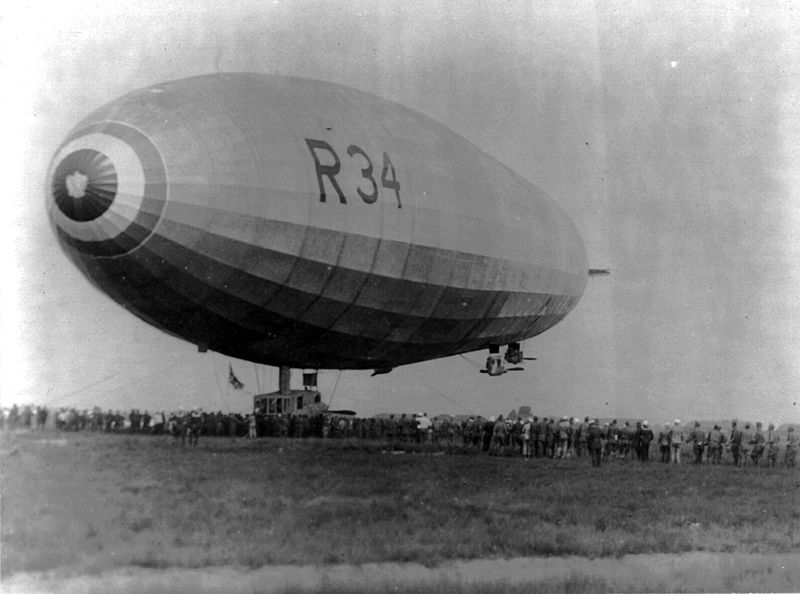
The R 34 was built in 1918 for the Royal Navy by the William Beardmore and Company in Inchinnan, Renfrewshire, Scotland. Her design was influenced strongly by that of a German Zeppelin that had been captured almost intact in England during the war.
In 1921 it was decided to attempt the first ever return East to West flight across the Atlantic.
It was then decided to attempt the first return Atlantic crossing, under the command of Major George Scott.[11] R34 had never been intended as a passenger carrier and extra accommodation was arranged by slinging hammocks in the keel walkway. Hot food was prepared using a plate welded to an engine exhaust pipe.
The crew included Brigadier-General Edward Maitland and Zachary Lansdowne as the representative of the US Navy.[12] William Ballantyne, one of the crew members scheduled to stay behind to save weight, stowed away with the crew's mascot, a small tabby kitten called "Whoopsie"; they emerged at 2.00 p.m. on the first day, too late to be dropped off.[13]
R34 left Britain on 2 July 1919 and arrived at Mineola, Long Island, United States on 6 July after a flight of 108 hours with virtually no fuel left.[14] As the landing party had no experience of handling large rigid airships, Major E. M. Pritchard jumped by parachute and so became the first person to reach American soil by air from Europe. This was the first East-West crossing of the Atlantic and was achieved weeks after the first transatlantic aeroplane flight. The return journey to RNAS Pulham took place from 10 to 13 July and took 75 hours.
You can read this wonderful adventure in its entirety at the Internet ArchiveIT is often thought necessary to preface a first literary effort with apologies from the author for its shortcomings. In this instance no one could be more aware of such a necessity than myself. But am I entitled to make apologies? R 34 is not a literary effort neither, therefore, am I an author. In writing a story such as this, the obvious and comparatively simple course would have been the adoption of the conventional narrative form, helped by notes and memories, ample time and thought and a comfortable arm-chair. Apart, however, from its practical usefulness or official importance, R 34's journey was just one long, wonderful and delightful experience. To look upon this journey coldly as part of yesterday, or to treat it with recognized con- vention, would be to lose both the essence and the spirit. My only hope of convincing my reader of this is to try and induce him to share our adventure- taking him with us upon our flight. Every word of this diary was written on board the Airship during the journey, with the exception of the explanatory footnotes and, of course, the appendices : the writer perched in odd corners, and amid continuous interruptions and ever- changing surroundings, to the silent accom- paniment of the wireless, like ghostly whispers across lonely space. Every incident, important or trifling, was recorded at the actual time of happening. Even to stop to focus or to pigeon- hole these would have been to destroy actuality. If only I can share a little of that fascinating and buoyant adventure with any readers of these pages I shall be content, I only hope my ship- mates may not find their journey too dull; if they do they must not blame R 34, for the fault will be mine.
An online album of Steampunk awesomeness.