Showing posts with label What Ifs. Show all posts

How would you save the Titanic?

Sunday, February 7, 2016 0 comments

Pie in the Sky Project

This one is a thought experiment.

I watched James Cameron's Titanic the other night.
(Yes I cried. Shut up!)
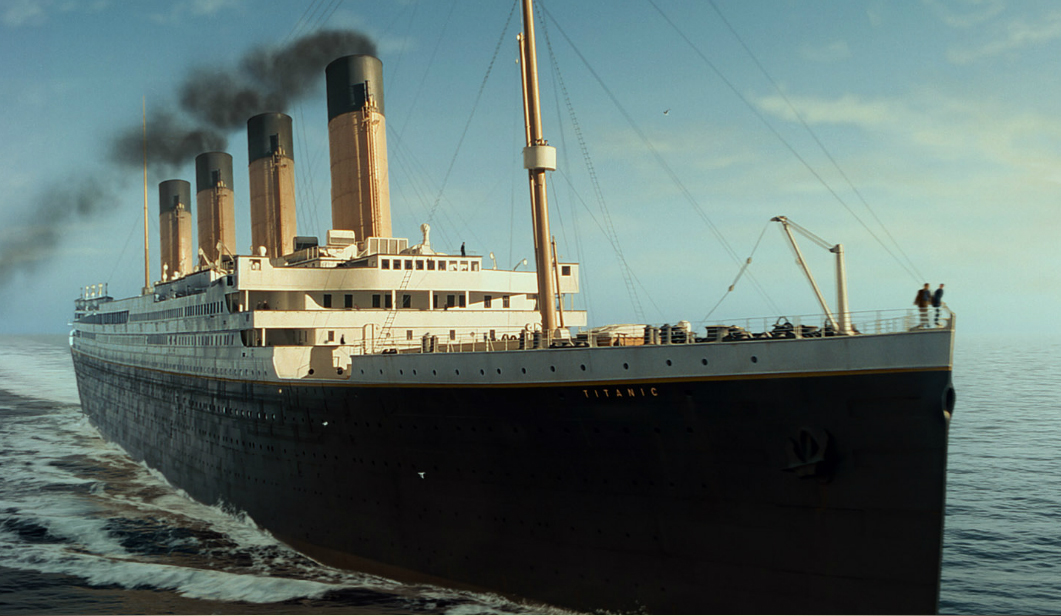
1997 seems like a long time ago, sigh.

As always when I read about the sinking, or see the movies, I am struck by the apparent docility with which the crew and passengers went to their fates in the icy North Atlantic.

With the exception of the children aboard, everyone else had been born and raised during the Victorian era. They had watched massive technological changes being made at a speed unmatched even in today's world. Of the 2224 people aboard on that fateful night there were well educated people, craftsmen, engineers, labourers, sailors, mechanics, domestic servants, business men and farmers. They came from all over Europe, America, and the British isles. Everyone had skills, ideas, hands, and a desperate desire to survive.

So why didn't anybody do anything to help stop the ship from sinking?

I remember reading the transcript of the American hearings held shortly after the sinking*. One of the surviving crewmen was an ex Royal Navy sailor who was amazed that nothing was done to try to stop the inrush of water. Obviously damage control was high on the list of things a Royal Navy sailor would be trained in.

In Cameron's movie the Captain makes a suggestion of opening the watertight doors to help the pumps and is told by the designer that it would only buy a "little more time" and that the sinking was inevitable.

A little more time is better than nothing right?

So here is the project.

Assuming you could convince the passengers and crew to follow your ideas, how would you save the ship? And If you can't save her, how could you buy enough time such that the S.S. Carpathia, when she arrived at 4:00am, could save most of the passengers.

This is the ultimate Escape Room game.

All you have is what is aboard the ship, and your knowledge of what is happening below decks.  This is important since we know more today about how she sank than the crew on board did at the time.

Still an interesting project no?

Here is a video of the sinking from National Geographic. Showing the current ideas of how she sank.

I'll start it off by examining the Captain's suggestion from the movie.

We know that the ultimate problem was that as the breached forward compartments flooded they forced the bow down allowing the water to flow over the too low tops of the water tight bulkheads into the next unflooded compartments. The designer was correct, that as a result the sinking was inevitable.

However, the Captain's suggestion is actually a good one. By judiciously opening the watertight doors in the bulkheads the water levels in the flooded compartments would equalize a bit, but more importantly the angle of the ship would be less steep. This coupled with the pumps would slow the over-topping of the bulkheads. Also since the seas were perfectly flat, allowing the ship to settle more slowly would give the passengers and crew more time out of the water. It would also make it easier to try something else, anything else, without having everything crashing forward on the increasingly steep decks.

Interestingly Royal Navy captains did this during WWI.

One of the biggest risks to a warship if she was torpedoed was capsizing as the compartments on the damaged side of the ship flooded. A capsize was the worst case as it instantly trapped the crew below decks! Captains would order what was known as "counter flooding", intentionally flooding undamaged compartments on the opposite side to keep the ship on a more even keel. The idea was that even if the ship sank as a result of the flooding, she would do so upright, thus allowing the crew more time to get out of the ship and into the boats or the water.

In the conditions in which the Titanic sank the Captain's suggestion above makes good sense.

So...

You find yourself on the bridge of the R.M.S. Titanic at 11:45 pm on April 14, 1912. The mighty ship's engines have stopped, her watertight doors are closed and her Captain has ordered the ship's officers to give him a damage report. Astern you can faintly see the ghostly shape of the iceberg that has doomed the ship on whose bridge you now stand. It is a still, perfectly calm, but very cold night in the North Atlantic, and unless you can come up with something, two hours and forty minutes from now you will be struggling in the icy water with more than 1500 of your fellow passengers. 

Unlike everyone else aboard, you know what is happening and what will happen.

What is your plan?


Keep your sightglass full your firebox trimmed and your water... er... life belt tied. 
KJ

*The Titanic Disaster Hearings: The Official Transcripts of the 1912 Senate Investigation. A fascinating and scary read, which I highly recommend if you are interested in the history of that tragedy.

Here is a great chronology of all the recorded events on board from the survivors accounts.


There is a PDF file of the chronology here. 

Update Feb 12 2016: If you are interested in a kind of macabre time frame in which to work on your plan check out this video of the sinking in real time!

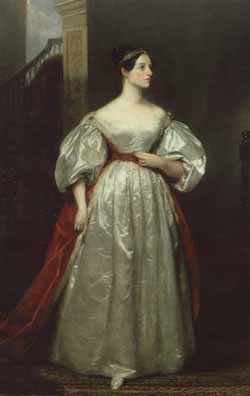


Ada Countess Lovelace, Charles Babbage and...

Friday, February 27, 2015 0 comments

The wondrous machine that might have changed the world!

In the Airship Technology Speech I gave back in January at the Absinthe Cafe the place where our Role Playing World separated from the real world was when Babbage's Analytical engine was actually constructed and working in 1880.

This world changing event was due to the work of Augusta Ada  King, Countess Lovelace.
In the real world Ada died in November of 1852 before Charles Babbage had perfected his design. In our alternate world she outlived Babbage and was responsible for making his designs work, under contract to the Royal Navy for whom Babbage was working as well.


The Honerable Augusta Ada Byron was the only legitimate daughter of Lord Byron. She married Baron William King in 1835 and when he became the Earl of Lovelace in 1838 she became a countess. Her fascination with mathematics and science as well as what she called "poetical science", describing herself as an "Analyst (& Metaphysician)",brought her into contact with Charles Babbage.

Of her work with Babbage on his Analytical Engine she said:
[The Analytical Engine] might act upon other things besides number, were objects found whose mutual fundamental relations could be expressed by those of the abstract science of operations, and which should be also susceptible of adaptations to the action of the operating notation and mechanism of the engine...
Supposing, for instance, that the fundamental relations of pitched sounds in the science of harmony and of musical composition were susceptible of such expression and adaptations, the engine might compose elaborate and scientific pieces of music of any degree of complexity or extent.
 

You can read more details of the Countess' work with Charles Babbage on her Wikipedia page.


From the Wikipedia article:

During a nine-month period in 1842–43, Ada translated Italian mathematician Luigi Menabrea's memoir on Babbage's newest proposed machine, the Analytical Engine. With the article, she appended a set of notes. Explaining the Analytical Engine's function was a difficult task, as even other scientists did not really grasp the concept and the British establishment was uninterested in it. Ada's notes even had to explain how the Engine differed from the original Difference Engine. Her work was well received at the time; scientist Michael Faraday described himself as a supporter of her writing.

The notes are longer than the memoir itself and include (in Section G), in complete detail, a method for calculating a sequence of Bernoulli numbers with the Engine, which would have run correctly had the Analytical Engine been built (only his Difference Engine has been built, completed in London in 2002). Based on this work, Lovelace is now widely considered the first computer programmer and her method is recognised as the world's first computer program.


The Countess's translation of Menabrea's memoir and her detailed comments are available at Fourmilabs here:

Sketch of
The Analytical Engine
Invented by Charles Babbage

By L. F. MENABREA
of Turin, Officer of the Military Engineers

from the Bibliothèque Universelle de Genève, October, 1842, No. 82
With notes upon the Memoir by the Translator
ADA AUGUSTA, COUNTESS OF LOVELACE

A truly fascinating look into what could have been a major turning point in world history.

As the author of the Fourmilab web page says:

“Sketch of the Analytical Engine” by L. F. Menabrea, translated and with extensive commentary by Ada Augusta, Countess of Lovelace. This 1842 document is the definitive exposition of the Analytical Engine, which described many aspects of computer architecture and programming more than a hundred years before they were “discovered” in the twentieth century. If you have ever doubted, even for a nanosecond, that Lady Ada was, indeed, the First Hacker, perusal of this document will demonstrate her primacy beyond a shadow of a doubt. 

Indeed!


Keep your sightglass full, your firebox trimmed and your water iced.
KJ

P.S.
A fun bit of information given how the Countess' contributions to mechanical computation were fundamental to the development of the fantastic airship we use in our Role Play check this out from her Wikipedia page:

Ada was often ill, beginning in early childhood. At the age of eight, she experienced headaches that obscured her vision. In June 1829, she was paralyzed after a bout of measles. She was subjected to continuous bed rest for nearly a year, which may have extended her period of disability. By 1831, she was able to walk with crutches. Despite being ill Ada developed her mathematical and technological skills. At age 12, this future "Lady Fairy", as Charles Babbage affectionately called her, decided she wanted to fly. Ada went about the project methodically, thoughtfully, with imagination and passion. Her first step in February 1828, was to construct wings. She investigated different material and sizes. She considered various materials for the wings; paper, oilsilk, wires and feathers. She examined the anatomy of birds to determine the right proportion between the wings and the body. She decided to write a book Flyology illustrating, with plates, some of her findings. She decided what equipment she would need, for example, a compass, to "cut across the country by the most direct road", so that she could surmount mountains, rivers and valleys. Her final step was to integrate steam with the "art of flying".
Oh if only the Real World had been less cruel.

"The Night Mail" Rudyard Kipling 1905

Saturday, October 18, 2014 0 comments

A Rudyard Kipling SF tale.

Reading the Log of the H.M.A. R 34 I posted about last time I came across this gem:

10.15 a.m. Weather report from St. John's :"Barometer 1010.2.Steady ; temperature 44 F. Fog. Visibility about half a mile, fog seaward, wind westerly, very light."
This is all right.
Turned in for an hour, but unable to sleep.
Become absorbed in Kipling's story of "The Night Mail" in Actions and Reactions. Think I must have read this story fifty times! Every time I read it the more impressed I become with the reality of its prophecies, which give one that very same  "atmosphere" of Aerial Liner travel that we are actually experiencing during every
moment of this journey.

 A quick lookup on Google and I discover this wonderful tale:

With the Night Mail

A STORY OF 2000 A.D.

(TOGETHER WITH EXTRACTS FROM THE CONTEMPORARY
MAGAZINE IN WHICH IT APPEARED)

BY
RUDYARD KIPLING

Illustrated in Color
BY FRANK X. LEYENDECKER
AND H. REUTERDAHL

NEW YORK
Doubleday, Page & Company
1909


This is a wonderful SF tale about traveling on a Mail Packet across the Atlantic. A delightful look at a future where airships are as much a part of regular air traffic as are heavier than air craft.

You can read the whole book, complete with the original colour illustrations, at Project Gutenberg here:

"With the Night Mail" by Rudyard Kipling

A bonus is the ads and articles that make up the "EXTRACTS FROM THE CONTEMPORARY
MAGAZINE IN WHICH IT APPEARED" portion.  Here is an example:


 High Level Flickers
"He that is down need fear no fall"

Fear not! You will fall lightly as down!

Hansen's air-kits are down in all respects. Tremendous reductions in prices previous to winter stocking. Pure para kit with cellulose seat and shoulder-pads, weighted to balance. Unequaled for all drop-work.  Our trebly resilient heavy kit is the ne plus ultra of comfort and safety.  Gas-buoyed, waterproof, hail-proof, non-conducting Flickers with pipe and nozzle fitting all types of generator. Graduated tap on left hip.
Hansen's Flickers Lead the Aerial Flight
197 Oxford Street
The new weighted Flicker with tweed or cheviot surface cannot be distinguished from the ordinary suit till inflated.
So what exactly is a "flicker" a parachute or some sort of personal lift device?
Lots more intriguing bits and pieces of the world of 2000 AD as envisioned by Rudyard Kipling.

Keep your sightglass full, your firebox trimmed and your water iced.
KJ

Pie in the Sky Projects

Monday, August 4, 2014 0 comments

What Ifs...

Everybody likes to day dream.  I like to daydream about projects, contraptions, airships (as you may have noticed) and other wondrous Steampunk things. Now daydreams are OK as a way to spend an idle few minutes waiting for a bus or waiting for a kettle to boil or something, but sometimes they can lead to projects that might actually be interesting or at least entertaining to actually create.

Between the pure fantasy daydream, and the detailed planning for a real project, lies the wonderland that I like to call "Pie In the Sky" projects. These are projects that get fleshed out a bit further than a pure daydream but don't fall prey to the issues that reality imposes if you actually want to turn them into real things.

For my first Pie In the Sky I present to you an Airship Gondola!

The idea here is to modify a motorhome, to become the gondola / control car of a personal airship.
Perhaps a small version of the one I have been designing in my Practical Airship Design Series.

By not having to worry about the pesky details of building and flying a real Airship, my project would be to just build the control car and drive it to events as if it was flying there!

We would start with something like one of these Airstream Motorhomes:

http://www.aluminarium.com/wp-content/uploads/2014/01/airstream-moho.jpg
Inside though we would make it look like it belonged to the Airship of our imagination, with flight controls and cabins, even an engineering and communications station.

Once someone stepped aboard I want them to think they could be suspended beneath the massive envelope of an Airship. One that has just touched down from some exotic adventures amongst the clouds.

With the passengers and crew suitably attired we could travel the by ways and have all sorts of adventures while never leaving the safety of the ground!

I was partly inspired by that amazing Victorian fantasy "The Never Was Haul"

Oh the wondrous Pie In the Sky projects!

Keep your sightglass full your firebox trimmed and your water iced.
KJ

The last of the Parasol Duelling Schools

Friday, April 4, 2014 0 comments

Amazing find from the archives!

It appears from this clip that at least one Parasol Duelling School lasted into the 1930s, in far off Japan of all places.

Perhaps this is not surprising as Japan has a long history of honouring martial arts. It is likely that Parasol Duelling was introduced soon after Japan was opened up to Western ideas during the mid 19th c.

Odd to think that when the Mikado was first being performed in London, and anything Japanese was considered exotic and wonderful, that Japanese ladies were having Parasol Duels.
 

The video clip shows the parade of the last school members through the streets of Ginza sometime in the 1930s. Most likely on their way to a formal competition.
 

More research into this last known remnant of Parasol Duelling is warranted!


Keep your sightglass full, your firebox trimmed and your water iced!
KJ

Evidence of Parasol Duelling in Historical Artworks

Saturday, March 1, 2014 0 comments

Parasol Duelling in art!

Originally posted in Madame Saffron Hemlock's Parasol Duelling League for Steampunk Ladies

Some strong evidence for Parasol Duelling can be found in these paintings by John Fredric Lloyd Strevens (1902-1990). While these pictures were painted in the first half of the Twentieth Century however they incorporate very interesting details when looked at from a Parasol Duelist's perspective. 

Key points to notice with reference to the Rules for Parsol Duelling I posted previously here:

1) No "hooks" on the handle to prevent catching during the "twirl"
2) There is no catch to keep the parasol closed so it is tied with the same ribbon used to mark the complete rotation during a twirl
3) When closed the parasol is hung from the arm by a loop, thus keeping it handy even when both hands were needed.
4) The cuffs are not plain, but where lots of lace is present they are mid forearm length thus preventing any interference with the parasol.


Key elements here are the lack of hook on the handle and the ribbons keeping the duelling parasol closed. Note how this duelist keeps her parasol handy in case of need by the removable ribbon that hangs the parasol from her arm.
 

While an otherwise unremarkable domestic scene, I would not be surprised if this lady did not figure very well in the competitions!


An elegant twirl!
 

Worthy of a Flirtation Trial finalist!


 A fine "snub" form.
 

Note the steely gaze of a hardened competitor!
 

The mid sleeve lace is common during the time when lace cuffs were fashionable amongst the non-duelling public.


Going for the "plant"!
 

Note how the ribbon that holds the parasol shut has been slipped back out of the way. This painting shows the confident stance and easy motion of an accomplished Parasol Duelist.
 

She could easily go to a "snub" or a "twirl" next.

This lady knows her business!
 

Things to note in this image, the relatively plain cuffs, the ribbon holding the parasol to her arm in readiness, the tipped forward hat. This latter is important because it allows a lady's hat to be elaborate but also prevents interference with the Parasol during a "twirl".

I particularly like the intense look of this serious competitor!


Paintings taken from this fantastic website Tutt's Art@

Keep your sightglass full, your firebox trimmed and your water iced.
KJ 


Let the Games Begin Part 3

Thursday, February 6, 2014 3 comments

Duella in umbra,

I have been getting a lot of interest in the Parasol Duelling rules I posted recently.
In fact we will be holding our first public demo this weekend at an event in Calgary called:
Well, Basil My Rathbone - Classic Movie and Performance Series
This week's movie is The Time Machine and we will be putting on several  Steampunk displays which will include a demo of Parasol Duelling. I'm hoping to get  more feedback to enable some fine tuning so that we can actually have competitions later in the year.


So since this seems to have struck a cord in the Steampunk community I thought I would have a bit of fun with some alternate history.  What would it be like if Parasol Duelling had actually been a real thing in Victorian England?  What follows is some faux academic analysis of the mysterious Victorian Parasol Duelling.

I hope you enjoy it.
Keep your sightglass full, your firebox trimmed and your water iced.
KJ

The Rules for Parasol Duelling are here.

Duella in umbra
(Dueling in the shade)

Ed: After the publication of the Victorian era Parasol Duelling rules in our most recent edition of the Neo-Victorian Chronicle there has been much discussion amongst scholars and historians about the historical provenance of the rules. Many notable historians of the period have stated outright that the rules are likely a hoax, that no such formalized rules existed,and that the storied exploits of famous Parasol Duelists were simply children's stories and nothing more. Others have taken a calmer "wait and see" approach suggesting that if the rules are legitimate and can be further documented then they would indeed explain several odd features of the late Victorian era. 

Even though I am quite sure the rules themselves are authentic, in that they were written in Victorian times, I have not myself been convinced that they represent a real competition style. That is, I was not convinced until I received the following long and detailed letter from Professor Lackstone Merrywilson of the Neo-Victorian studies department at Mintercommon College outside Oxford. Professor Merrywilson's letter was stunning in its implications for the historical context of the Rules themselves and does shed some significant light on the practice of Parasol Dueling during the reign of Queen Victoria.
 

 I will let the good professor's letter speak for itself.


Dear Mr Jepson
I was most interested to read your article concerning the Parasol Duelling Rules of Queen Victoria. This is an area of particular interest to me and one on which I have spent much of my time in recent years. I also followed with some interest the debates amongst our academic fellows in which the Rules seem to have taken on the form of a phantom, a historical Loch Ness monster as it were.

Parasol Duelling, far from being a phantom, was a major form of Ladies entertainment. Much prestige attended on the duels and many famous duellists, whose names live on today in the children's stories, were feted, and attained significant social standing on their own from their exertions on the field of honour. Of all this I am certain, though as you are no doubt aware, this is not the orthodox opinion amongst our fellow historians. The reason that is so has to do with one of the great erasures of history.

Parasol Duelling as a sport and specifically a Ladies Sport has been erased from the public memory, erased as surely as Pompeii was erased by Vesuvius in 79 AD. But even the most perfect erasure leaves a mark, a sign that something was there before. Hints, little pieces of out of place information, even the children's stories themselves, all serve to point to that which has been lost.

If you recall the paper my colleagues and I presented, at the Victorian Historical Pastimes Conference three years ago, you will remember that we postulated that the main reason for the paucity of information on Parasol Duelling was that after the death of Queen Victoria there was a social backlash against it simply because it was a strictly Female Sport and at that time the social mores were swinging towards a more Male oriented culture with respect to public competitions. The tragedy of the First World War also helped to finally obliterate any remaining vestiges of the sport because of its association with the hated Hun and the resulting post war anti-continental feelings.

We based these conclusions on a compilation of news paper articles, court documents and the deeds and leases of the Duelling Schools themselves. By the end of the period many of these once famous schools had been converted to taverns, and in some cases bawdy houses, in order to pay the bills. As such they often ran afoul of the increasingly stringent social and legal framework that was coming into force after the old Queen's death. As we showed in our paper the common elements of all these documents do indeed show the shadow of Parasol Duelling from earlier in Victoria's reign.

Since the presentation of our paper I have come across a document that finally lays to rest any concerns regarding the historical provenance of the rules and of Parasol Duelling itself!  I am in the process of preparing a paper with other members of our faculty, for peer review and presentation at next years conference. But I have my fellow author's permission, in light of the controversy your article has aroused, to release some of the information from our paper in hopes that more eyes will be able to see the truth and historical veracity of Parasol Duelling. 

The document is entitled simply "Duella in umbra" which translates from the latin as "Duelling in the Shade".
Those who study children's literature will immediately recognize the title as being one of the lines of the rhyming song included in the "Adventures of Two Parasol Mary", by Algernon Oakham. This book is often pointed to by scholars as being the origin of the legends of the Parasol Duel.

The author of "Duella in umbra" however is none other than Maxwell MacDonald-Smythe himself!  
The manuscript was found amongst some stored boxes of documents rescued from the archives of an old airship hanger in Portsmouth that had been badly damaged during World War Two.  The document looks to be the final draft that had been sent to a publishing house to be produced as a book.

There are no extant copies of the book that we are aware of, so whether or not it was actually published is unclear. The copy of the rules that you published in the Chronicle is word for word the rules included in the manuscript!  This implies that at least one other copy of the manuscript exists and perhaps the book itself may survive somewhere. 

The manuscript is a history of Parsol Duelling, it documents the arrival of Parasol Duelling in England with a lady in the household of Prince Albert in 1840. How as it gained popularity the young Queen was apalled at the loss of parasols and the injuries sustained by Ladies of all classes in duels that were little more than brawls with parasols used as fragile clubs. MacDonald-Smythe also documents in meticulous detail the various schools that had sprung up in England and, as she became an accomplished Duelist in her own right, the desire of the Queen to organize and formalize the competitions between them.

It is in this manuscript that we see for the first time the formalizing of the Rules with the Brandenburg Variations, and the subsequent massive increase in popularity of Parasol Duelling at all levels of society.

MacDonald-Smythe also documents the rise of the Street Duel and how this form of informal duel eventually made its way into the organized competitions held every year at Wembley.

Now it must be said that MacDonald-Smythe is writing near the end of Victoria's Reign at a time when more conservative elements in English society were beginning to put constraints on the freedom of Ladies to partake in such open female only competitions.

In one revealing passage he laments the passing of the "Flirtation" trials that had been such a popular feature of Parasol Duelling competitions in previous years.

Rest assured that with the "Duella in umbra" we have an eye witness guide to the world of Parasol Dueling.
It is not a hoax or a bunch of children's stories, but rather a social phenomenon that had major effects on the role of women in Victorian society.  That it could be so thoroughly erased from the memory and social records of England is a subject worthy of further study and we intend to touch upon that in our paper.

I hope that this note has given you courage to continue your work and we would be happy to assist and collaborate with you in studying this fascinating period of English history.

Yours Sincerely

Lackstone Merrywilson
Professor Neo-Victorian Studies
Mintercommon College
Oxford


Airfoiled

Saturday, September 21, 2013 0 comments

A fun short film!

The trials of being an inventor.


Keep your sightglass full, your firebox trimmed and your water iced.
KJ

Our Airship!

Sunday, August 18, 2013 0 comments

Finally

I managed to get a reasonable diagram put together of the airship I have been designing and describing in my Practical Airship Design series.

The diagram is loosely based on the Graf Zeppelin. I was going to use the outline of the Hindenburg which is smoother but I like the look of the slightly more primitive shape of the Graf.

The base shape was done by Wolf  and can be found along with similar drawings of many airships real and proposed at http://wolfsshipyard.com/www.wolfsshipyard.mystarship.co/Misc/Airships/Airships.htm  
That page is definitely worth a visit if you are interested in Airships!

So here she is in all her glory the newly christened HMAS Velvet Brush.

HMAS Velvet Brush by Kevin Jepson based on the Graf Zeppelin. Original image from Wolfs Shipyard
Keep your sight glass full, your firebox trimmed and your water iced.
KJ

Time travel...

Sunday, July 28, 2013 0 comments

Time ...

A lovely little short Steampunk adventure.


Keep your sightglass full, your firebox trimmed and your water iced.
KJ

Steampunk Train Battleship

Friday, June 7, 2013 0 comments

Battleship on rails!

This video shows the first live steam powered trial of  the Steampunk Rail Battleship Barnum's Dream.


From YouTube:

Published on Apr 14, 2013
Battleship train ship model with cannons and lasers that fire. It has many handmade moving parts that are driven by a live steam engine. The video is a depiction of it's first trial run, with some animation and effects thrown in. It was made from over 50 found parts and took over 2500 hours to construct. Except for the steam engine, which was modified, it is totally hand built using ordinary home tools.
It is almost four feet tall and 51 inches long. Hope you enjoy.
 You can get lots of information on the model and how it was built at the blog here:
Steampunk Machine "Barnum's Dream"

Now that is my kind of model!

keep your sightglass full, your firebox trimmed and your water iced.
KJ

Fun with "Unintended Consequences"

Thursday, March 21, 2013 0 comments

Steampunk is all about what ifs!

These "what ifs" occur when a technological development happens at a different time than what history tells us it actually did. In the Steampunk Worlds we play with, this is the divergence that gives us the reason to play with alternate histories.

I was reading some online articles about technological developments during the 19th Century, the developments that lead to our current worlds in fact, trying to find points in time to do some "What If" brainstorming on, just for fun.  I came across this one at Civil War Trust which discusses the effect that the development of Whitney's Cotton Gin in 1794 had on the subsequent history of the American South.

 This machine revolutionized the process of separating cotton from its seed, making it dramatically faster and less expensive to turn picked cotton into usable cotton for textiles. Eli Whitney invented the gin in 1794, and by 1850 the tool had changed the face of Southern agriculture. Before Whitney’s gin entered into widespread use, the United States produced roughly 750,000 bales of cotton, in 1830. By 1850 that amount had exploded to 2.85 million bales. This production was concentrated almost exclusively in the South, because of the weather conditions needed for the plant to grow. Faster processing of cotton with the gin meant it was profitable for landowners to establish previously-unthinkably large cotton plantations across the south. But harvesting cotton remained a very labor-intensive undertaking. Thus, bigger cotton farms meant the need for more slaves. The slave population in the United States increased nearly five-fold in the first half of the 19th Century, and by 1860, the South provided about two-thirds of the world’s cotton supply. Southern wealth had become reliant on this one crop and thus was completely dependent on slave-labor.

This is a classic "unintended consequence" of technological development that was unlikely to have been foreseen by anyone at the time.

So if we look at some major technological darlings of Steampunk, like the Babbage Engine or Airships for example, one can see that the probable unintended consequences of actual utilization of these technologies would have dwarfed that of potentially the entire Industrial Revolution to that point. Both of these two, as just one example, are disruptive technologies, they influence many aspects of society and make possible much more rapid development of other technologies. Like the snowball effect that the microchip had in the 20th Century.

Many of Tesla's inventions, should they have been fully developed, would likely have done the same.

I think that is what makes Steampunk such an interesting genre to play with. We can keep the world mostly as it was for atmosphere, then change one development, the "What Ifs", and then let the unintended consequences run their course.

That my friends is Magick!

Keep your sightglass full, your firebox trimmed and your water iced.
KJ

Women of the Future 1902

Friday, March 15, 2013 0 comments

Predicting the future is always a dangerous business!

Like the images of the future in one of my previous posts trying to show what the future would be like is always tricky.  The images below were created by postcard artist Albert Bergeret in 1902 for a set of playing cards entitled "Women of the Future".

As is typical of the male oriented business world there are some that are simply designed to attract "attention", like this lovely Lady General and her coy Lieutenant for example.


The Doctor
 However many of the other images are striking in their business-like but elegant way, for example these images of professional women as envisioned by M. Bergeret. 
The Reporter
The Lawyer
The Sailor


There are more images collected at Rocking Fundas
 
Many of these are good models to use for the basis of some interesting Steampunk outfits I should think.

Keep your sightglass full, your firebox trimmed and your water iced.
KJ

Worlds First Colour Moving Pictures 1902

Thursday, January 31, 2013 0 comments

We take colour films for granted nowadays.

But there was a time when it was novel indeed.

This article at the BBC has a video showing the very first true colour films ever produced.  Made by pioneer Edward Raymond Turner from London who patented his colour process on 22 March 1899, these films used three different colour  filters and three cameras to film the same scene. Then a complicated projector displayed the three films through corresponding filters simultaneously giving the illusion of colour.  Prior to this colour films were created by painstakingly hand tinting each frame.


This is a similar system that was used for the original tests of Colour TV in the 50s.

Turner's process wasn't successful, not because the film didn't work as it obviously did, but because the mechanical projector system wasn't reliable enough

Hmmm...

Sounds like a great Steampunk tinkerers project to me biggrin

Keep your sightglass full, your firebox trimmed and your water iced.
KJ

Why I'm here...

Wednesday, January 9, 2013 1 comments

As our roleplay group has evolved, and our participation in it has changed over time, I thought I would try to put down into words why I'm playing this game.

These are my own reasons and certainly don't apply to anyone else. Perhaps a bit of musing on what I hope to get out of our playing around will at least help you to understand where I am coming from.
(This is necessarily a self absorbed post so if you are not interested feel free to ignore it. smile)

Hopefully some of it is informative and at least a bit entertaining.

I am a technical kind of guy. I love figuring out how things work, and how to keep them working, that is also my day job. I love to delve into the structures of things and how the parts fit together. I enjoy the beauty of mechanisms in action, how a machine or device is suited for its purpose, and how the elements of a design fit together to make the whole thing work. Perhaps that is a bit of a failing in that I would prefer an elegant, interesting, and simple, design over a modern, complex, even totally functional one.

I also love the Sea and ships. Having sailed on a traditional square rigger, on large and small yachts, and on small sail boats, I like to think I have some idea of the world of the old seafarers in their wind driven vessels. To face the harsh environment of the open sea, with none of the modern safety equipment and rescue services of today, is something hard for most people in today's overly safety conscious world to imagine. To actually want to face such an environment is even harder to understand.

As a sailor I see myself not as an officer, but more a common "Foremast Jack" in Napoleonic Royal Navy parlance. Poorly fed, abused by arbitrary authority, treated as a necessary evil by the system, a common sailor was a "cost" that needed to be minimized. Whether in the Navy or Civilian ships, the lot of the common seaman was never an easy one. However, his life was generally better than many men ashore during the whole of the 19th century. With the exception of that scourge of bad diets, known as scurvy, which afflicted people ashore as well as at sea well into the 20th century, the common sailor was healthier than many living in crowded, unsanitary cities and working in dangerous factories for minimal wages. Life at sea is tough and dangerous, and one mechanical failure, accident, or act of bad navigation away from simply disappearing off the face of the planet to become another statistic, a notice at Lloyds in London "Posted Missing Presumed Lost".

I enjoy being in that position for real and I like to imagine myself in such a "one hand for yourself and one hand for the ship" environment.

So to be blunt, I have a bit of a split personality. One side is technical, interested in the details of how things work, mechanically inclined and always ready (I like to think at least) to play with new technologies. The other side is simply happy to be a cog in the working of the primitive, but elegant, machine that is a sailing ship or early steam ship, whether commercial or naval. One side looks to the future the other side looks back to the past.

This is perhaps why I find Steampunk so compelling, there is a forward looking element, the great "what ifs" we play with, and a necessarily conservative and backwards looking element, that finds beauty in the old ways of the Victorian era. The later part of the 19th century, and the early part of the 20th, saw an amazing explosion of new technologies, technologies that also had a profound impact on the society of the day. The impacts were far reaching, contained as they were in one of the largest empires in the history of the world.

How does a society handle having the very basis on which it developed so radically changed in so short a time?

Our modern world has NOT faced such a change, despite our great technological advances, simply because we were already past that hurdle. From our jaded perspective in the first decade of the 21st century, the changes wrought upon the newly industrialized societiess of Europe, while staggering in scale, are considered "quaint", occuring a they were within the apparently straightlaced and conservative Victorian era.

Which brings me to Airships, and OUR Airship in particular.

There were no practical airships in the Victorian era. Until the first few years of the 20th century, engines of sufficient power and lightness simply didn't exist. Balloons were highly developed and many people were experimenting, but really until the work of Santos Dumont in France and Count Ferdinand von Zeppelin in Germany, nobody had much success. However, the first few years of the 20th century brought airships to the stage of working practical machines. Thirty years later the great rigid airships were, if only briefly, the lords of the sky.

So why are airships such a part of Steampunk, since Victorians could only have dreamt about them?

I think it is simply because they WERE a dream. In hindsight it would have been possible to build them in late Victorian times, had a couple of developments in engine technology been developed earlier. Combined with the vast increase in mathematical capabilities that a working Babbage Analytical Engine might have given engineers and inventors, all kinds of technological developments might have been accelerated. This acceleration would have resulted simply because the analysis of design changes could have been made without the expense and risk of physical prototyping. That is the jumping off point for Steampunk in my opinion.

The Gurney "Steam Carriage"

Sunday, December 30, 2012 0 comments

This is another of the great "What Ifs" of Steampunk.
In 1827 an English inventor, Sir Goldsworthy Gurney, perfected a workable "Steam Carriage". Inspired by advances in steam engines and boilers, and the early railway successes of Stephenson et al , he created a self mobile carriage that could carry passengers and cargo along the post road routes in England.
Unfortunately the railway lobby was rapidly gaining power and soon the British government began levying taxes and creating regulations which eventually stifled the nascent  steam road carriage business.
In 1827 however the prospects for the new invention looked very bright and this write up in "The Mirror of literature, Amusement, and Instruction" had a frontpage description complete with diagram.
Enjoy
Keep your sightglass full, your firebox trimmed and your water iced.
KJ

From Project Gutenberg


THE MIRROR
OF
LITERATURE, AMUSEMENT, AND INSTRUCTION.


VOL. X, NO. 287.]                   SATURDAY, DECEMBER 15, 1827.                 [PRICE 2d.


NEW STEAM CARRIAGE.

Explanation of the References.
1. The Guide and Engineer, to whom the whole management of the machinery and conduct of the carriage is intrusted. Besides this man, a guard will be employed.
2. The handle which guides the Pole and Pilot Wheels.
3. The Pilot Wheels.
4. The Pole.
5. The Fore Boot, for luggage.
6. The "Throttle Valve" of the main steam-pipe, which, by means of the handle, is opened or closed at pleasure, the power of the steam and the progress of the carriage being thereby regulated from 1 to 10 or 20 miles per hour.
7. The Tank for Water, running from end to end, and the full breadth of the carriage; it will contain 60 gallons of water.
8. The Carriage, capable of holding six inside-passengers.
9. Outside Passengers, of which the present carriage will carry 15.
10. The Hind Boot, containing the Boiler and Furnace. The Boiler is incased with sheet-iron, and between the pipes the coke and charcoal are put, the front being closed in the ordinary way with an iron door. The pipes extend from the cylindrical reservoir of water at the bottom to the cylindrical chamber for steam at the top, forming a succession of lines something like a horse-shoe, turned edgeways. The steam enters the "separators" through large pipes, which are observable on the Plan, and is thence conducted to its proper destination.
11. "Separators," in which the steam is separated from the water, the water descending and returning to the boiler, while the steam ascends, and is forced into the steam-pipes or main arteries of the machine.
12. The Pump, by which the water is pumped from the tank, by means of a flexible hose, to the reservoir, communicating with the boiler.
13. The Main Steam Pipe, descending from the "separators," and proceeding in a direct line under the body of the coach to the "throttle valve" (No. 6,) and thence, under the tank, to the cylinders from which the pistons work.
14. Flues of the Furnace, from which there is no smoke, coke and charcoal being used.
15. The Perches, of which there are three, conjoined, to support the machinery.
16. The Cylinders. There is one between each perch.
17. Valve Motion, admitting steam alternately to each side of the pistons.
18. Cranks, operating on the axle: at the ends of the axle are crotches (No. 21,) which, as the axle turns round, catch projecting pieces of iron on the boxes of the wheels, and give them the rotatory motion. The hind wheels only are thus operated upon.
19. Propellers, which, as the carriage ascends a hill, are set in motion, and move like the hind legs of a horse, catching the ground, and then forcing the machine forward, increasing the rapidity of its motion, and assisting the steam power.
20. The Drag, which is applied to increase the friction on the wheel in going down a hill. This is also assisted by diminishing the pressure of the steam—or, if necessary, inverting the motion of the wheels.
21. The Clutch, by which the wheel is sent round.
22. The Safety Valve, which regulates the proper pressure of the steam in the pipe.
23. The Orifice for filling the Tank. This is done by means of a flexible hose and a funnel, and occupies but a few seconds.

Mr. Goldsworthy Gurney, whose name is already familiar to most of our readers, after a variety of experiments, during the last two years, has completed a STEAM CARRIAGE on a new principle; or, as a wag said the other day, he has at length brought his plan to bear. We have, accordingly, procured a drawing of this extraordinary invention, which we shall proceed to describe generally, since the letters, introduced in the annexed Engraving, with the accompanying references, will enable our readers to enter into the details of the machinery:—First, as to its safety, upon which point the public are most sceptical. In the present invention, it is stated, that, even from the bursting of the boiler, there is not the most distant chance of mischief to the passengers. This boiler is tubular, constructed upon philosophical principles, and upon a plan totally distinct from any thing previously in use. Instead of being, as in ordinary cases, a large vessel closed on all sides, with the exception of the valves and steam conductors, which a high pressure or accidental defect may burst, it is composed of a succession of welded iron pipes, perhaps forty in number, screwed together in the manner of the common gas-pipes, at given distances, extending in a direct line, and in a row, at equal distances from a small reservoir of water, to the distance of about a yard and a half, and then curving over in a semi-circle of about half a yard in diameter, returning in parallel lines to the pipes beneath, to a reservoir above, thus forming a sort of inverted horse-shoe. This horse-shoe of pipes, in fact, forms the boiler, and the space between is the furnace; the whole being enclosed with sheet-iron. The advantage of this arrangement is obvious; for, while more than a sufficient quantity of steam is generated for the purposes requited, the only possible accident that could happen would be, the bursting of one of these barrels, and a temporary diminution of the steam-power of one-fortieth part. The effects of the accident could, of course, only be felt within its own enclosure; and the Engineer could, in ten minutes, repair the injury, by extracting the wounded barrel, and plugging up the holes at each end; but the fact is, that such are the proofs to which these barrels are subjected, before they are used, by the application of a steam-pressure five hundred times more than can ever be required, that the accident, trifling as it is, is scarcely possible.

About Gears, Goggles, and Steam oh My!

Here I collect interesting bits of information related to the world of Steampunk.

Category List

Absinthium (12) accessories (15) Airships (69) Art (1) Beakerhead (3) Books (65) comics (5) computation (11) costumes (16) etiquette (19) events (30) fiction (87) Flight Engineer (33) Fun (57) games (36) history (109) howto (21) Inventions (57) manners (6) Meetup Repost (90) movies (4) music (4) Musings (44) mystery (23) news (8) Parasol Duelling (46) Photos (67) Pie In the Sky (3) poetry (1) resources (50) Role Playing (59) Serial Story (28) Ships (39) Steam (34) Steampunk Sports (26) Tesla (13) video (77) website (57) What Ifs (16)

Recent Comments

Theme images by sndr. Powered by Blogger.

Followers